What is keratosis pilaris? Common KP triggers and simple ways to manage it

Written byMedico Digital

Reviewed byDr Guy Ratu
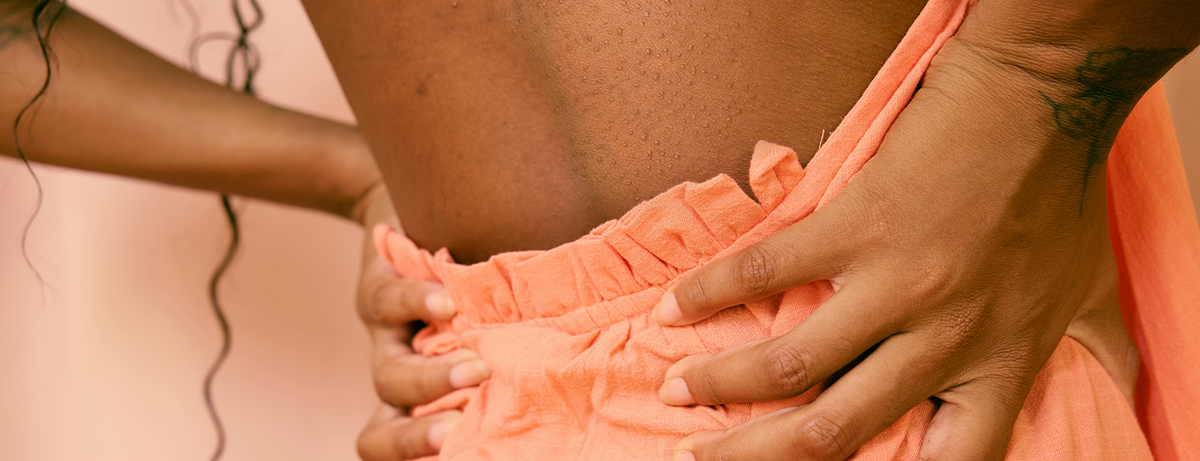
Those stubborn little bumps on your arms or thighs? Likely keratosis pilaris. Harmless yet frustrating, this so-called “chicken skin” can be softened with the right skincare routine
Summary
1What is keratosis pilaris?
Keratosis pilaris (often also called KP) is a harmless, non-contagious skin condition that affects 50–70% of teenagers and around 40% of adults…
2Causes of keratosis pilaris
Keratin is a protein produced by the body to protect the skin from infections and damage…
3Symptoms and progression of keratosis pilaris
The main symptoms of keratosis pilaris are small, red or skin-coloured bumps that can be surrounded by rough, dry and sometimes itchy skin…
Curious about those little, rough bumps on the back of your arms? If they look more like red goosebumps than conventional pimples, it may be keratosis pilaris.1
What is keratosis pilaris?
Keratosis pilaris (often also called KP) is a harmless, non-contagious skin condition that affects 50–70% of teenagers and around 40% of adults.1 So, if you’re dealing with patches of rough, bumpy skin, you’re definitely not alone.
Keratosis pilaris pimples can be white, red, skin coloured or slightly darker. You may also notice redness around the small bumps.1 While they may feel rough, rest assured they’re totally painless.
Although keratosis pilaris can appear anywhere on your body, it most commonly shows up on the backs of your upper arms and the fronts of your thighs.1 Sometimes, it also affects the buttocks, lower back, chest and occasionally the face.1
But why do these bumps appear? It’s all due to a build-up of keratin.1 Let’s talk about what this means and explore the causes of keratosis pilaris in more detail.
Causes of keratosis pilaris
Keratin is a protein produced by the body to protect the skin from infections and damage.1 With keratosis pilaris, the body produces too much keratin, which clogs the hair follicles, creating those telltale bumps.1
We know that too much keratin leads to keratosis pilaris, but what causes the build-up of keratin in the first place?
While we don’t fully understand what causes keratosis pilaris, we do know that it tends to run in families.2 This means that if one of your parents has it, you’re more likely to develop keratosis pilaris yourself. Fortunately, KP isn’t infectious – you can’t catch it from others, nor can you pass it on.1
You might also be more prone to keratosis pilaris if you have eczema, asthma, hay fever, dry skin or overweight if you’re.3 Many people notice that KP symptoms worsen during the winter months as well.1
Symptoms and progression of keratosis pilaris
The main symptoms of keratosis pilaris are small, red or skin-coloured bumps that can be surrounded by rough, dry and sometimes itchy skin.4
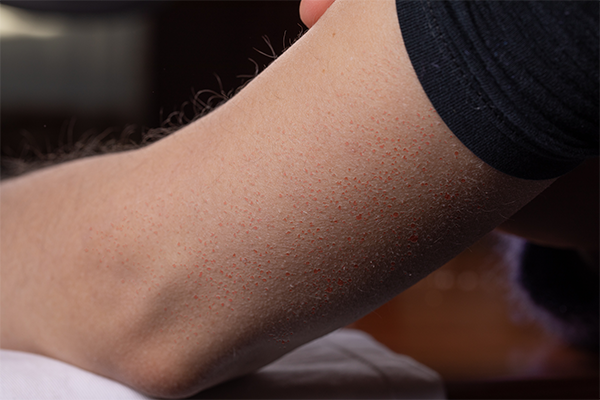
You’ll most commonly find keratosis pilaris on the:1,4
- arms
- thighs
- bottom
- lower back
- chest
KP may also appear on the face and eyebrows, although this is less common.
You may have had these bumps since childhood or your teenage years (children and teenagers are most likely to have KP), and they often tend to get fade and gradually disappear as you get older.3
Potential triggers for keratosis pilaris
While we don’t know exactly what causes keratosis pilaris, we do know that certain factors can make KP worse or trigger flare-ups.1,4
Hot baths and showers, harsh exfoliation and perfumed soaps or bathing products that dry out your skin are the common culprits.4
Keratosis pilaris symptoms are often worse during the winter when skin is drier and more likely to brush against rough clothing.4 But, whatever the season, there are plenty of things you can do to improve the appearance of your KP if it’s bothering you.
How to treat keratosis pilaris
There’s no need to treat keratosis pilaris if it’s not causing any issues – it’s a totally harmless condition.4
If you do choose to address it, it’s worth knowing that it’s not a curable condition, but treatment can help manage symptoms. This means that if you want to see long-term improvements, you’ll have to be consistent with your skincare routine.5
The American Academy of Dermatology recommends a three-step keratosis pilaris skincare regime:5
- Exfoliate gently with a washcloth, glove or loofah. Avoid scrubbing your skin, as this can damage it and make KP worse
- Apply a keratolytic (also known as a chemical exfoliator). Look for products containing alpha hydroxy acids (AHAs), glycolic acid, lactic acid, a retinoid (like retinol), salicylic acid or urea.6 We recommend a KP exfoliator with 3% AHA, 1% lactic acid and glycolic and malic acids
- Follow up with a moisturiser that’s designed for dry skin. Aim to use it at least two to three times a day, and whenever your skin feels dry
If your skin becomes irritated, cut back on exfoliating or consider trying a different product.5
To keep your skin hydrated and happy:1,4
- skip hot showers or baths
- opt for mild soaps or soap-free cleansers
- moisturise regularly after showering or having a bath
Feeling unsure about which products to use or not seeing the results you want? You can always ask for help and advice from your pharmacist or doctor. They might even prescribe stronger treatments, like topical retinoids.1,7
If keratosis pilaris is really affecting your confidence and skincare alone isn’t cutting it, there are other options like photodynamic therapy, laser therapy, chemical peels and dermabrasion.1 Just keep in mind that these treatments aren’t usually covered by the NHS, so be sure to do your research before choosing a private clinic.
The final say
Keratosis pilaris causes small raised bumps and dry skin – usually on the arms and thighs (although it can appear in other places too).1-5 KP is more common during the winter and often runs in families.1,3,4
While there’s no need to do anything about keratosis pilaris, if these bumps are affecting your confidence, regular exfoliation and the right skincare products can make a difference.1,5,6
Discover how to create the best KP skincare regime with keratosis pilaris-friendly skincare.
Disclaimer - This article provides informational advice and is not a substitute for medical care. Curated by experts for accuracy, we take great care to ensure the information is up-to-date and relevant. However, you should always consult your GP or healthcare professional before using supplements or alternative products, particularly if you have medical conditions or are under supervision.
1. British Association of Dermatologists. Keratosis pilaris [Internet]. [cited 2024 Dec 22]. Available from: https://www.bad.org.uk/pils/keratosis-pilaris/
2. Wang JF, Orlow SJ. Keratosis Pilaris and its Subtypes: Associations, New Molecular and Pharmacologic Etiologies, and Therapeutic Options. American Journal of Clinical Dermatology. 2018 Jul 24;19(5):733–57.
3. American Academy of Dermatology. Keratosis pilaris: Who gets and causes [Internet]. [cited 2024 dec 22]. Available from: https://www.aad.org/public/diseases/a-z/keratosis-pilaris-causes
4. NHS. Keratosis pilaris [Internet]. [cited 2024 Dec 22]. Available from: https://www.nhs.uk/conditions/keratosis-pilaris/
5. American Academy of Dermatology. Keratosis pilaris: Self-care [Internet]. [cited 2024 Dec 22]. Available from: https://www.aad.org/public/diseases/a-z/keratosis-pilaris-self-care
6. Reddy S, Brahmbhatt H. A Narrative Review on the Role of Acids, Steroids, and Kinase Inhibitors in the Treatment of Keratosis Pilaris. Cureus. 2021;13(10):e18917. https://doi.org/10.7759/cureus.18917 [cited 2025 jan 10].
7. Wang JF, Orlow SJ. Keratosis Pilaris and its Subtypes: Associations, New Molecular and Pharmacologic Etiologies, and Therapeutic Options. American Journal of Clinical Dermatology. 2018;19(5):733–57. http://doi.org/10.1007/s40257-018-0368-3 [cited 2025 jan 10].